
- Why Train in Immersive Design? A Key to Reinvent Live Performance and EventsImmersion Sector: Key Figures and Trends to Watch in 2025.Immersive Design: An Experiential Revolution Serving EmotionFinding my voice, or how to adapt a show for the tourist marketBrand Activation, or how to harness the power of imaginationTowards the Summits: A “semin'air” that reboosts and inspiresMy Path... and Yours!Eat the Cake in Search of HappinessImmersive theatre for job seekersAn opportunity to seize, a branch to openOur visit to the F.R.I.E.N.D.S ExperienceHow to create the perfect virtual ChristmasAn immersion in the circus with BoxplanetPlaying Annie Oakley, a historical character, in an immersive show"A Midsummer Night's Dream" becomes realityFind Our TalentsThe Creation of a World
Immersion Sector: Key Figures and Trends to Watch in 2025.

In just a few years, immersive experience has become a true phenomenon in the world of live performance and events. The sector has recorded a 21% annual growth rate since 2019. (source: Evolving Immersive: The 2025 Immersive Industry Report)
While immersion had long been confined to niche artistic projects or technological experiments, it is now established as an essential strategy to capture attention, create emotion, and generate audience engagement. And the numbers speak for themselves: immersion is reshaping the boundaries of contemporary creation.
A rapid growth of the global market.
This success goes far beyond the technological domain. Far from being limited to VR or 3D, the immersive experience now spans sectors as diverse as culture, education, tourism, health, and even insurance. Yes, you read that right: even insurance companies are adopting it to make their offers or internal training systems more engaging. 69.2% of people interested in immersion in museum, commercial, or real estate sectors (dubbed "immersive curious") have incorporated immersive experiences into their future budgets. (source: Evolving Immersive: The 2025 Immersive Industry Report).
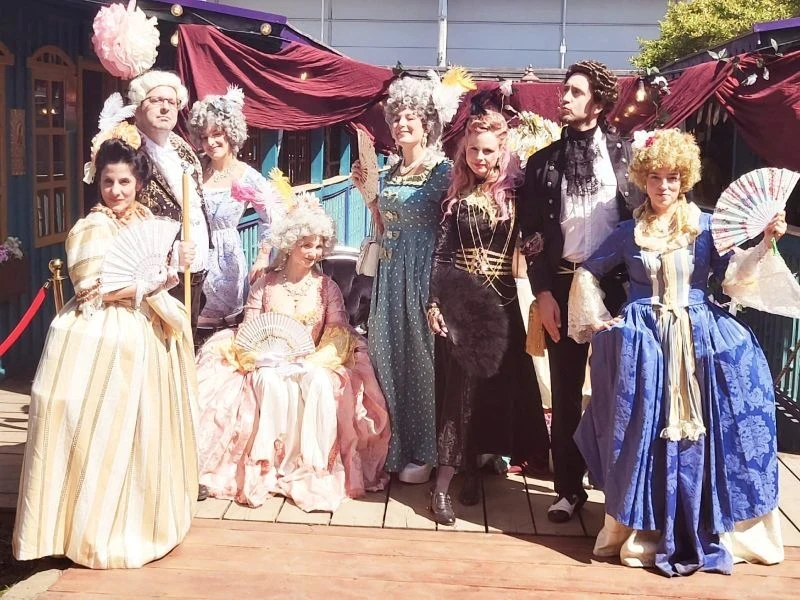
Marie-Antoinette &co at the World Experience Organization
Sign up for the training to acquire these skills
Live performance is reinventing itself.
The live performance field is one of the first experimental grounds for immersive design. In recent years, more and more hybrid creations have emerged: immersive theater plays, performative walks, interactive sound installations, promenade performances, augmented reality shows… Artists push the boundaries of traditional stage settings to immerse the audience in complex, often non-linear, and deeply sensory narrative worlds.
This new type of performance transforms the spectator’s role: it is no longer about sitting in a dark room, but about moving, exploring, deciding. The audience becomes an actor in their experience. This gives rise to freer, more fluid, more organic forms — and above all, more emotionally impactful.
Events focus on experience.
In events, where constant innovation is necessary to stand out, the immersive experience is now at the heart of design strategies. A conference, a professional trade show, a product launch, or an exhibition can all be reimagined with a strong immersive dimension. The goal: captivate participants and offer them a memorable moment they won’t forget.
Event companies plan to integrate immersive elements into their future events. Why? Because emotion drives engagement, memorization, and ultimately, loyalty.
A well-designed immersive space allows telling a story, conveying a message, or promoting a product in a way that goes beyond the rational. It transforms a one-time moment into an unforgettable memory.
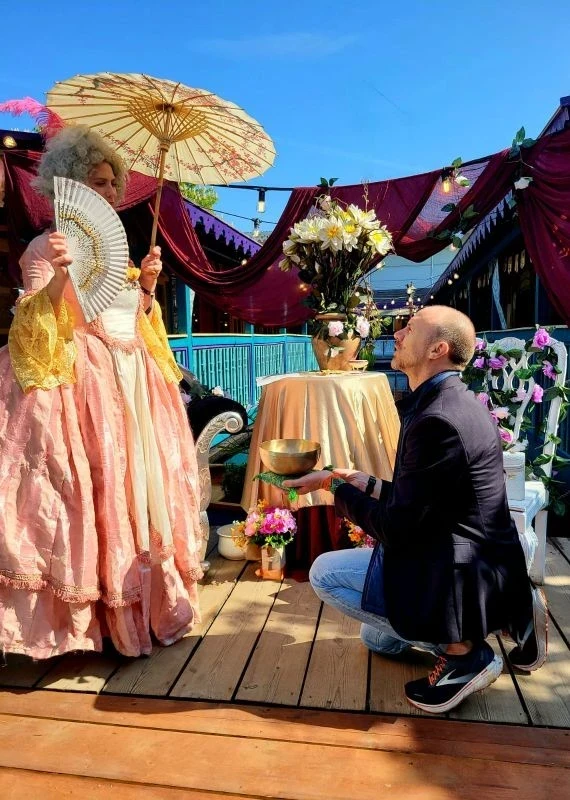
Set yourself apart from your competitors!
Immersive technologies: a powerful lever (but not indispensable).
Virtual reality, augmented reality, holograms, interactive screens, 3D projections, spatialized sounds… Creators’ technological tools are continuously expanding. Yet technology is not a sine qua non condition to create a successful immersive experience. Sometimes, a good scenario, well-thought human interaction, or an original staging is enough.
What the public seeks today is not technical prowess, but emotional impact. The most powerful experiences are often those that put the human at the center: a look, a voice, a gesture, an enveloping atmosphere. This approach makes the difference, whether in an intimate theater play or a large-scale installation.
A transformation of creative professions.
With the rise of immersion, professions in live performance and events are evolving quickly. Being a good director or skilled technician is no longer enough. It is now essential to think in terms of interaction, non-linear narration, user journey, group dynamics, sound design… and sometimes UX.
The experience designer becomes a conductor who must coordinate space, light, sound, body, and story to provoke emotion. A real skills transformation is underway. For artists, producers, stage managers, scenographers, or technicians, getting trained to understand the codes of immersion becomes crucial.
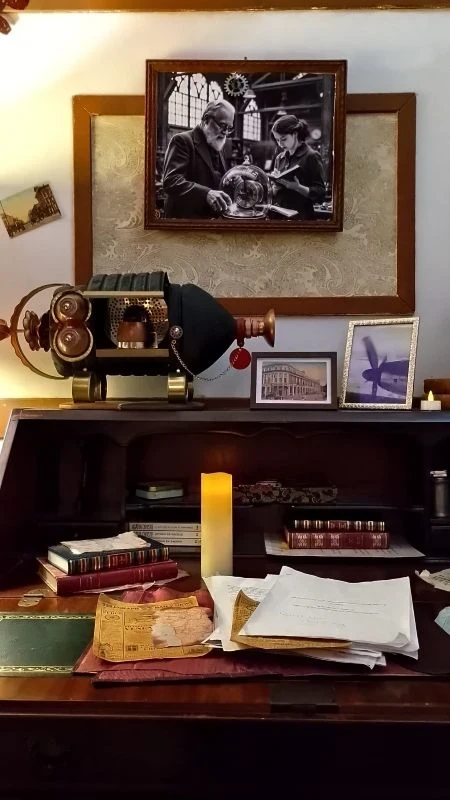
Training to meet demand.
It is in this context that trainings like Immersion 360° – Strategies and Techniques to Understand the Basics of Immersive Creation, offered by Eat The Cake Studio, take on all their meaning. Aimed at creation professionals, this training explores the fundamentals of immersive design: interactive writing, interpretation in immersive environments, design of sensitive spaces, technical coordination…
With 14 hours of practical and theoretical courses, it offers a first concrete immersion into the immersive performance universe. It is an ideal opportunity to acquire essential tools and develop a 360° vision of the sector.
Sign up for the training to acquire these skills
Conclusion: A booming sector.
The immersive experience is no longer a marginal trend. It is profoundly redefining the way we conceive live performance and events. The numbers confirm a durable structural evolution, driven by growing public demand and a permanent innovation will from creators.
To avoid falling behind, it is essential to inform yourself, test, and train. Because the future of events and creation undeniably passes through emotion, interaction… and immersion.