
Let the good times roll!

We celebrated Mardi Gras a few days ago, so it's the perfect time to talk about a subject that has been close to my heart for many years: the legends of New Orleans and in particular one of its most famous residents, Marie Laveau, also known as the Queen of Voodoo.
But first, let me introduce you to the city of New Orleans. This is how I described it in the synopsis of the TV series I have been working on with a friend for years:
"In 1852, New Orleans is not a place like any other. It is the city with the highest mortality rate, the deadliest epidemics, not to mention the serial killers, murders, fires, floods, slavery, and widespread government corruption. A city where the heady glamour of the rich mixes with the stench of urban poverty, where public executions draw crowds worthy of Mardi Gras while white men use racial politics to secure their power, and where the souls of the dead mingle freely with the bodies of the living. It is also a city of voodoo, a mystical religion practiced with fervor but greatly feared, brought by African slaves and embodied in a street justice unique to New Orleans. Its magic evokes hope and bad omens as its priests and priestesses render their judgments in their temples and altars. It is a volatile mix of life and death, decadence and despair. It is New Orleans."
That sets the scene, doesn't it? And it's the perfect setting for the shining gem that was Marie Laveau.
A simple Google search shows the difficulty of finding reliable information about Marie Laveau. She surrounded herself with mystery during her life, and her legend grew so much that everyone then added their own spin to her life and exploits, making it practically impossible to disentangle truth from fiction, starting with her birth date, which some place in 1794 and others in 1801 with the same unwavering confidence.
One thing is undeniable: in the mid-19th century, Marie Laveau became the most powerful and respected voodoo priestess in New Orleans. She was known for her healing powers as well as her ability to cast spells on those who crossed her. Her reputation was such that people thought she could control the weather and raise the dead!
Powers or not, she clearly benefited from some very down-to-earth help. While Mother Marie was a nurse and sold her products at the local apothecary, her daughter (who would in turn take the title of Marie Laveau in her voodoo practice, which also explains why it's so difficult to find reliable information since the lives of mother and daughter are intrinsically intertwined) was a hairdresser for the rich and powerful ladies of New Orleans. Encouraging gossip from her clients and buying their servants to get information (in exchange for money or more spiritual services), Marie-daughter quickly amassed a treasure trove of knowledge about the life of New Orleans' high society, knowledge her mother skillfully used in her voodoo rituals to advise the said clients. It was never really known if Marie's exploits were due to her connections in the real world or her spiritual advisors, but in any case, the results were indisputable!
That said, it was not easy to convince the city's nobles to indulge in voodoo, which had a deplorable reputation with its noisy ceremonies, sacrifices, and possessions. But as you must have understood, Marie was a smart woman and she heavily relied on the elements of Christianity already present in voodoo practices to make them more acceptable to high society, appeased by the presence of familiar symbols such as the Virgin Mary and rosaries.
You may have already noticed that we particularly like strong women. Marie was a shrewd businesswoman who knew how to build her own legend to become a figure both revered and feared in New Orleans and soon across the country. We like to say she was the Tony Soprano of the French Quarter!
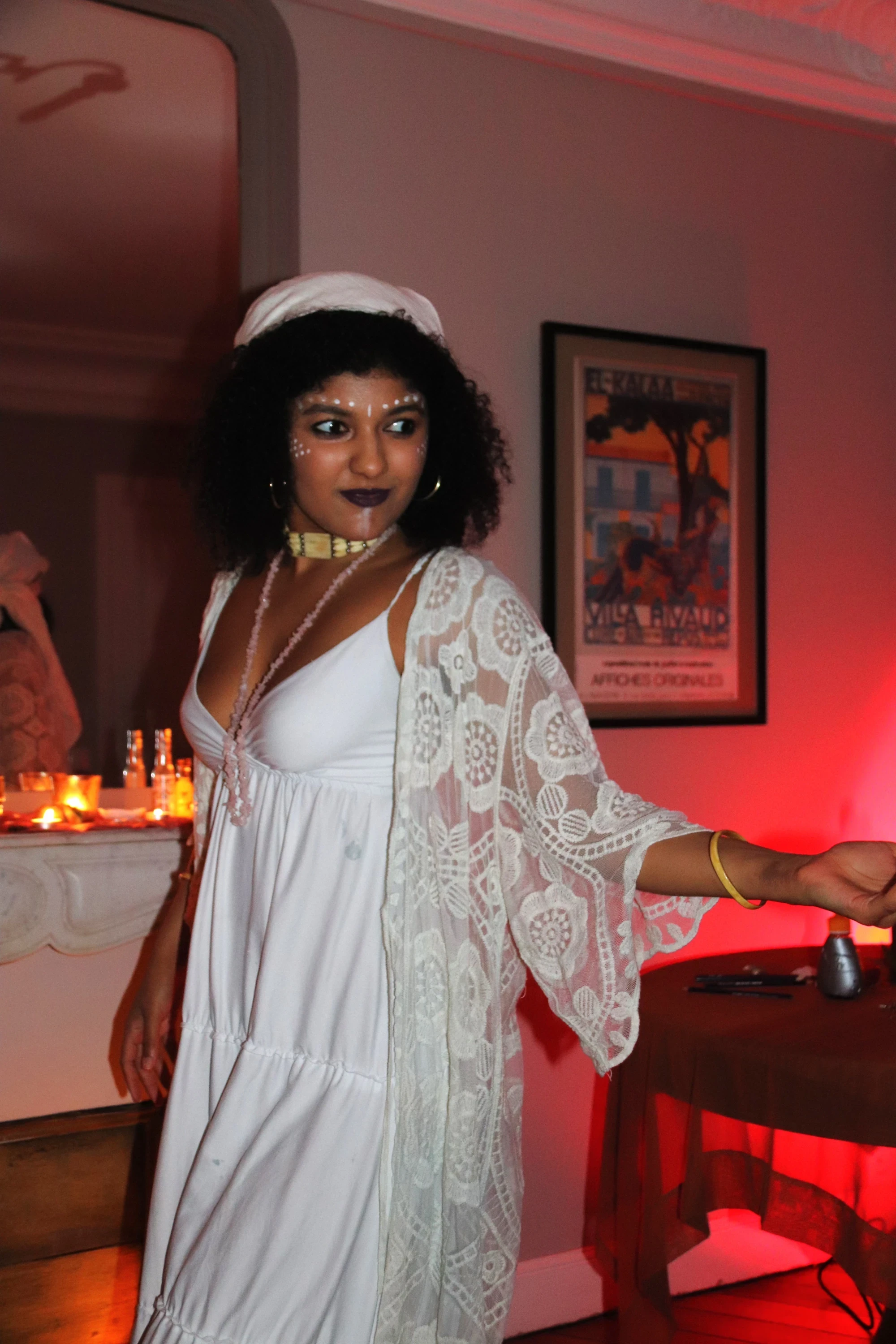
Which brings us back to the Mardi Gras celebrations. As with most things in her life, the Voodoo Queen's influence on these traditions is unclear, but she was alive when Mardi Gras became an official holiday in New Orleans, and it's certain that the city's most renowned voodoo priestess, a woman who had not only influence as a mystical figure but was also deeply involved in the social and cultural life of the city, would have had a role to play in its biggest festival.
Even before it became an official public holiday, Mardi Gras was an important celebration in New Orleans for centuries. Mardi Gras takes place on the day before Ash Wednesday, which marks the start of the Christian season of Lent, a season of fasting and prayers. In New Orleans, Mardi Gras is a festival that runs throughout the city for weeks, with parades, parties, and masked balls in the streets. The krews, secret societies sometimes dating back several centuries, travel the streets on elaborately decorated floats and throw gifts to the adoring crowds.
Speaking of gifts, legend has it that Marie Laveau threw beads to the crowd during the parades to spread luck and positive energy. The colorful beads were and still are a staple of voodoo tradition. And if you've had the chance to attend a Mardi Gras, you know that bead necklaces are the most common and famous gift thrown to the crowd from the floats.
Marie Laveau's influence is also visible in the use of masks and costumes during Mardi Gras. In voodoo culture, masks and costumes were used to represent different spirits and deities. Marie Laveau is said to have introduced this tradition into the Mardi Gras celebrations, encouraging people to dress up with elaborate costumes and masks, which they still do today, to the point that stores display signs asking party-goers to remove their masks before entering.
This blog only scratches the surface of an extraordinary character and city. I have been in love with Marie Laveau and the city where she lived since 2006 and I have worked hard to try to bring her to life in one way or another... which is why she is now part of our Cabinet of Curiosities! Our first group of connoisseurs met her during the February session, and if you're lucky, she might be part of the curiosities exhibited when you visit us!
Now, if you'll excuse me, I'm going to practice throwing beads for the next Mardi Gras. And as they say over there (in French), "Laissez les bons temps rouler!"