
An invitation to adventure: Harnessing the power of the Magic Circle in immersive design
During the exciting Immersive Days, I had the opportunity to co-design and co-host a workshop on the Magic Circle with the talented Eliza Calmat from Dream Factory. With our students for the day, we explored and tested the transformative potential of creating immersive experiences within a defined space.


The Magic Circle is a deeply rooted concept in game studies; its origin is attributed to the Dutch historian Johan Huizinga who, in 1938, explored the presence of game elements in culture and emphasized their importance in society in his work "Homo Ludens." On this basis, the term "magic circle" was coined by Eric Zimmerman in 1999 and gained popularity through his book "Rules of Play," which he co-wrote with Katie Salen in 2003.
The Magic Circle is a space where specific rules and boundaries are created and applied. This serves several purposes:
1. Creating Structure and Support: by establishing a defined space with specific rules, participants can fully immerse themselves and suspend their disbelief, allowing the experience to reach its full potential.
2. Promoting Uniqueness and Identity: the distinct set of rules, aesthetics, and themes within the Magic Circle offers a sense of exclusivity and differentiation to participants.
3. Building a Community: a common understanding of rules and boundaries fosters a sense of belonging and connection among participants. This shared experience creates opportunities for collaboration, dialogue, and lasting relationships.
4. Encouraging Emotional Engagement and Connection: immersing participants in a world through sensory elements, rich narratives, and interactive captivates their attention and evokes strong emotions. This increased engagement leads to memorable experiences.
The Magic Circle has not only revolutionized the game industry, but also found its place in various fields such as theatre, marketing, education, and events. It allows participants to enter enchanting worlds, actively participate in storytelling, and experience transformative adventures.
To be continued: how we demonstrated these principles during our workshop!

As facilitators, we definitely wanted to start our workshop in an immersive manner. Eliza and I welcomed our students with our faces hidden under the hoods of our mysterious cloaks, setting the stage for the rest of the workshop. Together, we embarked on the co-creation of a Magic Circle.
The first thing we asked them was to lay the foundation of this Circle by giving us three elements: a tribe name, a rule for our universe, and a character trait. These three elements were used throughout the workshop.
We focused on two essential ingredients that would shape our journey: the senses and the stages. We prepared sensory kits containing carefully selected objects related to specific sensory experiences. This guided exploration helped our students understand how to engage all senses to evoke emotions and themes within an immersive world.
Then, using the framework of the "5 Es of Experience Design" (Enticement, Entry, Engagement, Exit, and Extension), we defined the main stages of an experience to ensure a coherent and memorable journey for the participant, from the beginning to the end of the experience.
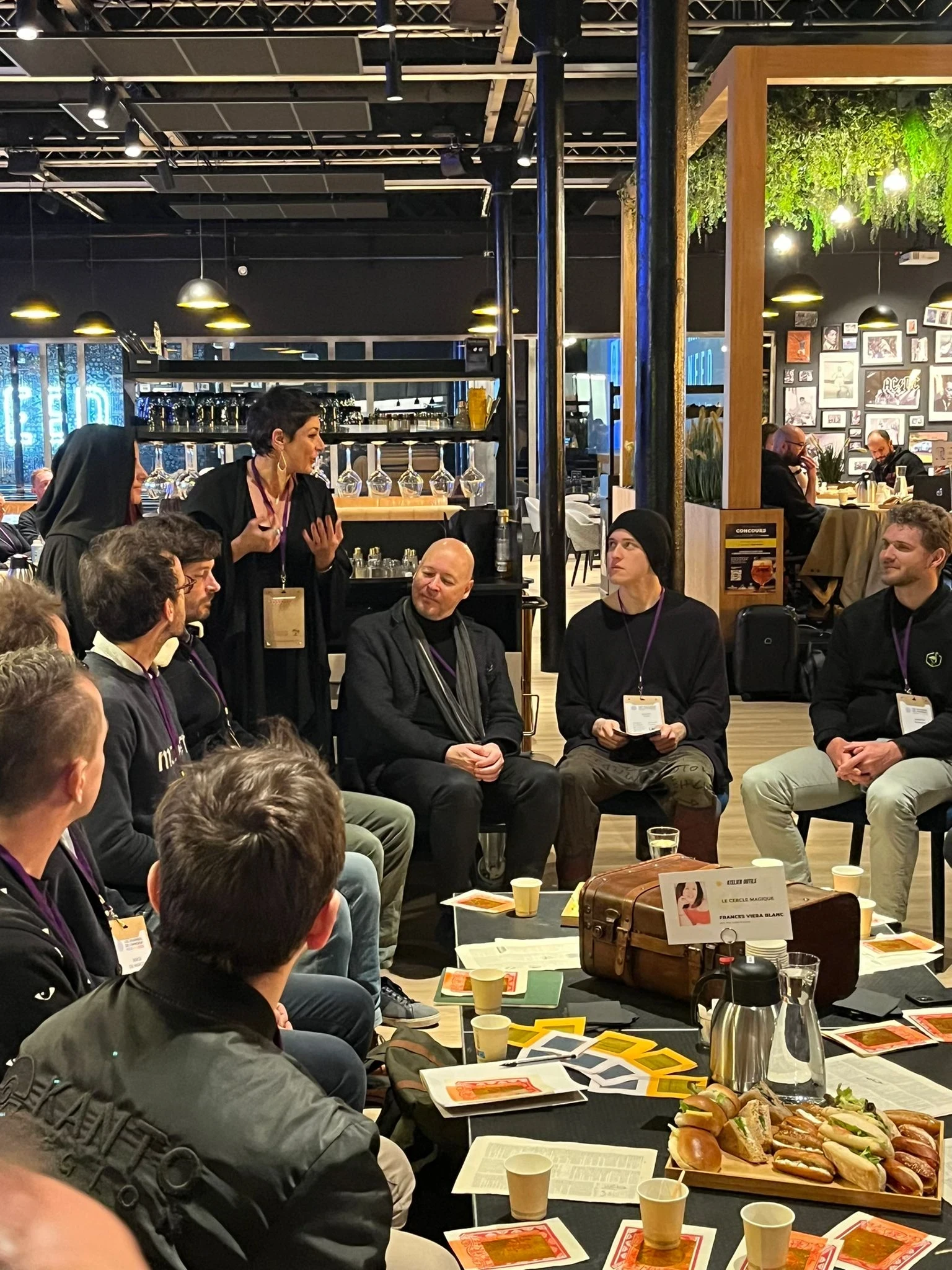
Through practical exercises, we divided everyone into groups, each assigned one of the five Es. Inspired by Alice in Wonderland, the groups created immersive experiences centered on the stage assigned to them. This allowed them to apply these new concepts and gain a deeper understanding of building a Magic Circle. Each group then presented their experience to the others, and all showed incredible creativity and imagination!
We closed our workshop with a tangible (and fun!) reminder of the transformative power of the Magic Circle in the form of fortune cookies acting as oracles for their future immersive projects.
Feedback on our workshop, coming from a diverse group of over 40 participants representing different sectors, including branding, marketing, event design, ritual design, and fashion, was incredibly positive. Although the Magic Circle concept is relatively new to the French audience, they found it incredibly useful and functional in creating engaging experiences and brands.
This is just a glimpse of what the Magic Circle has to offer, but I hope it has inspired you to unleash your creativity and create captivating and innovative experiences that will leave a lasting impact on your participants. Together, let’s shape the future of immersive design, transform storytelling, and redefine our engagement with the world around us!